


Every week, get the latest curated signals about how technology & AI is impacting your work — ideas and guides from me, what’s on the radar, and free knowledge to level you up. Paid subscribers get full access. Also, please complete our anonymous survey so we can better gauge your content interests and cater deals & discounts for you. Thanks!
💡What Happens When Work Becomes A Lifestyle Choice (and a Rebrand)…
I’ve been thinking a lot about the future of work lately. And it’s not in this sort of abstract 10-year forecast or these vague projections, but more of a practical, ground-level reality of how we spend our days currently and also going forward.
I’d say this has been quietly brewing in the background for a long time because every time I draft a newsletter edition, write a field guide, or just grab coffee with founders in my network, the conversation inevitably loops back to the same fundamental question:
What does work actually look like in 1, 5, or even 10 years?
It’s safe to say that the core definition of work is undergoing a massive shift right now.
For a long time, we kind of trudged away under a legacy mentality that forced most people to believe that we had to “work to live,” which was submitting to an idea that we had this rigid 40-hour office structure, corporate ladders, and high-friction manual execution, which is where the term “make a living” came about. It was the notion that work was not where we really wanted to be, and we all waited for the weekend to start.
But as technology rapidly dissolves routine cognitive drag, that equation is flipping.
We’re now moving into an era where work looks less like a mandatory job and more like a deliberate lifestyle choice, which is structured around how technology has impacted the modern workplace and personal autonomy.
In other words, is there an opportunity now to “live to work”?
This might sound counterintuitive (and even wrong) at first, but just imagine being able to wake up and be genuinely excited about going to “work” — whatever this looks like for you.
And given where we are now, this opportunity is now more within reach than ever before. That’s exciting, and technology has obviously impacted a lot of this.
So from a technology standpoint, this is because we can all agree that AI and cultural shifts are disrupting work at its very foundation.
Whether you view this shift with optimism or anxiety, I reckon it’s the defining factor of our decade. Over the next few years, we’re going to witness a HUGE displacement of traditional execution roles across nearly every industry. Execution-heavy, repetitive positions are now being automated, while at the same time, there’ll be an entirely new ecosystem of roles, careers, and one-person operations that will be exploding into existence.
But the real line in the labor market won’t be human versus machine. It will be between those who are able to adapt to emerging technologies and those who cling to old-school workflows.
A recent study (from BCG) shows that over 50% of white-collar jobs are being fundamentally reshaped. Routine execution is being absorbed by software and autonomous agents, shifting the value curve entirely onto higher-order human capabilities: like strategic judgment, domain expertise, taste, and first-principles reasoning.
Instead, you move from being a worker doing manual work to an orchestrator setting parameters, reviewing output, and steering direction.
Avoiding this transformation won’t make it disappear. Change is the only true constant, and those who master this new paradigm early will hold an overwhelming advantage. They will be more adaptable, more resilient, and capable of operating with the output leverage that used to require a 20-person team.
Given all of this. This brings me to a major announcement for this publication.
When we started out back in 2025, “Alpha Bytes” was essentially a placeholder, and I didn’t realize this at the time. In hindsight, it was a temporary name while we tested ideas and observed where technology was taking us. But as the landscape evolved, it became obvious that our true focus wasn’t just tracking tech news (there are much better places for that), but it was understanding how technology is fundamentally altering human work and economic output.
That’s why we’re officially rebranding this publication to: Alpha Work
Our commitment to you remains exactly the same. We will continue delivering the same high-signal, anti-hype content designed specifically for founders, builders, operators, and knowledge workers. The only difference is that our editorial focus is now explicitly dedicated to exploring the next frontier of work: dissecting emerging agentic workflows, design patterns, new models, frameworks, and interesting tools that give you leverage.
I also started a GitHub page where you can find the latest agents, skills, tools, and scripts that can help you across your workflows.
This is a massive inflection point for all of us. If we can help more people understand and navigate these changes early, we can make a genuine difference in how they build their careers and businesses.
I’d love to hear your thoughts on this next chapter. If there are specific workflows, tools, or industry shifts you want us to cover in future essays, hit reply and let me know.
And if you find value in what we’re building here, feel free to share Alpha Work with a colleague or friend who is building for what’s next.

🚀 LEVEL UP:
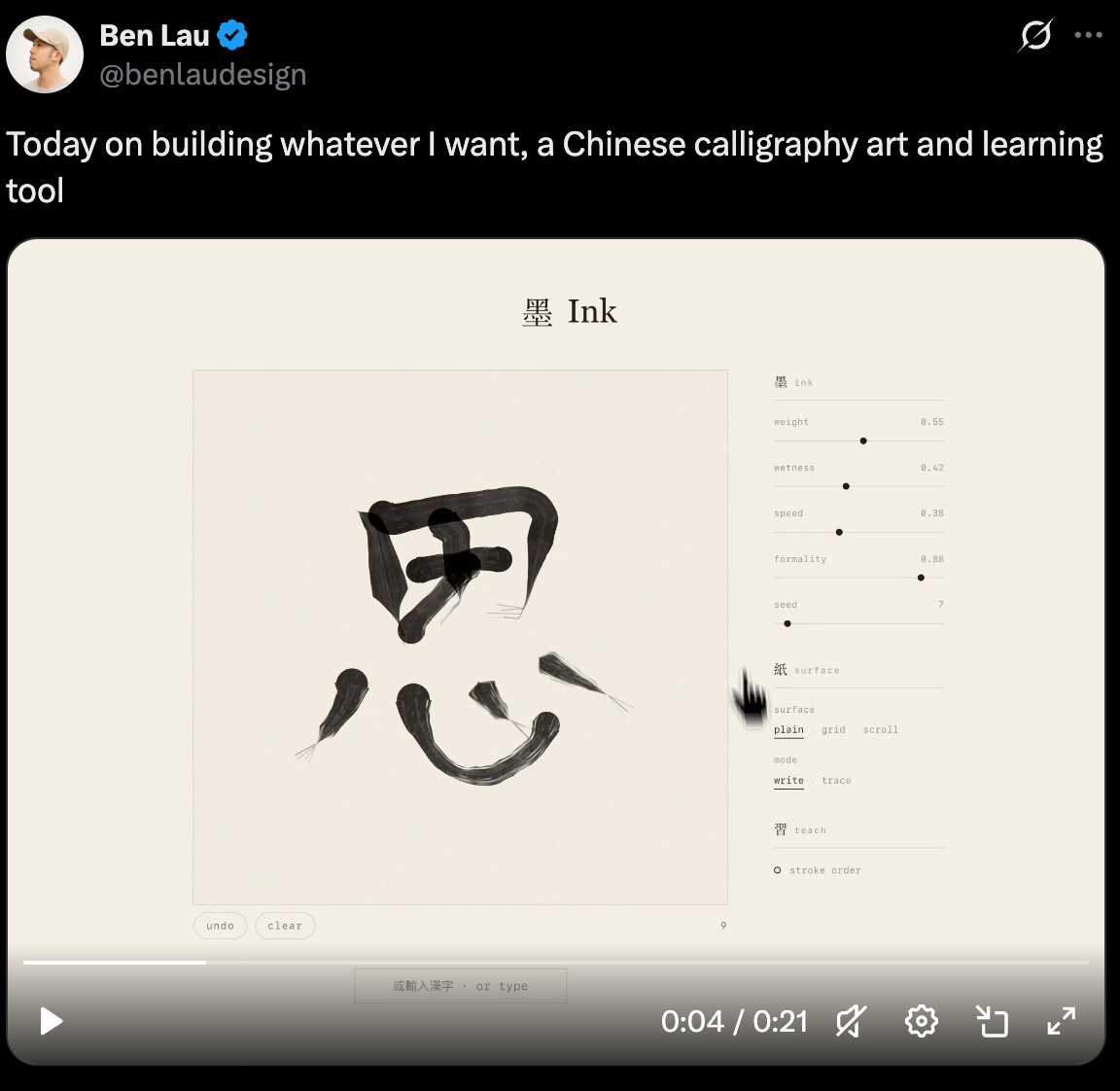
Chinese + Japanese calligraphy art and learning tool. The image below speaks for itself. Ben is a pretty good designer, so he knows a thing or two about what he built.
Understanding Agent Skills from first principles: created this video that helps you better understand how agent skills actually work under the hood.
Did AI Write This? 4 Ways to Check if Text Was Generated: neat blog post from Pangram (the AI detector platform - not sponsored) that provides some key tips on how to check if you just read AI-generated text
In a world of AI slop, taste is your biggest asset — worth a read about to develop good taste and why it’s so damn important
📈 GRAPH OF THE WEEK:

The Cursor team ran an agent swarm to entirely rebuild SQLite in Rust (great programming language btw!) using a hybrid approach of the latest/greatest tier-1 models as planners and then using tier-2 and below models as workers.
So in a nutshell: Planner tokens are expensive but rare, while Worker tokens are cheap but dominate volume. So when you use a frontier planner like Opus 4.8 or Fable 5 and pair it with a cheaper worker like Composer 2.5, you can get similar quality to a pure frontier setup at a fraction of the price!
I know that Cursor has this feature that can do this automatically now, but if you’re not using Cursor, you can just upgrade/downgrade across model tiers manually between planning and working. Might save you some coin!
🔥 ON THE RADAR:

I mean it’s not wrong. APIs are abhorrently underrated, and there was some chatter a while back saying that APIs were dead. Hah!
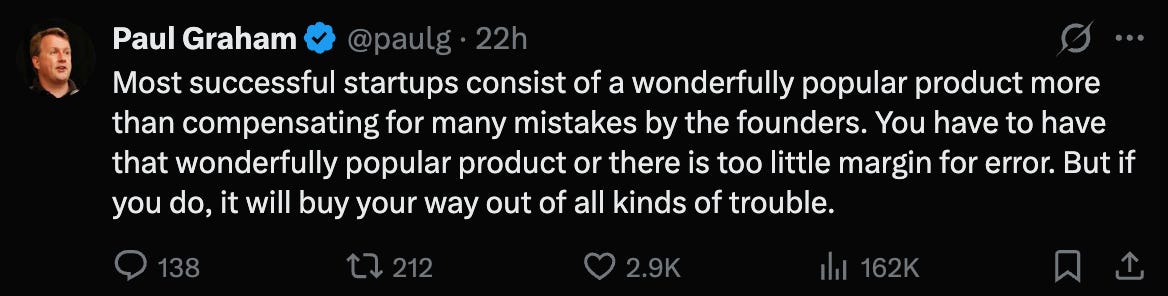
Curious to know which companies + founders have exhibited this trait. Also, how much sh*t do the founders have to be in to create any regression in product usage/love?
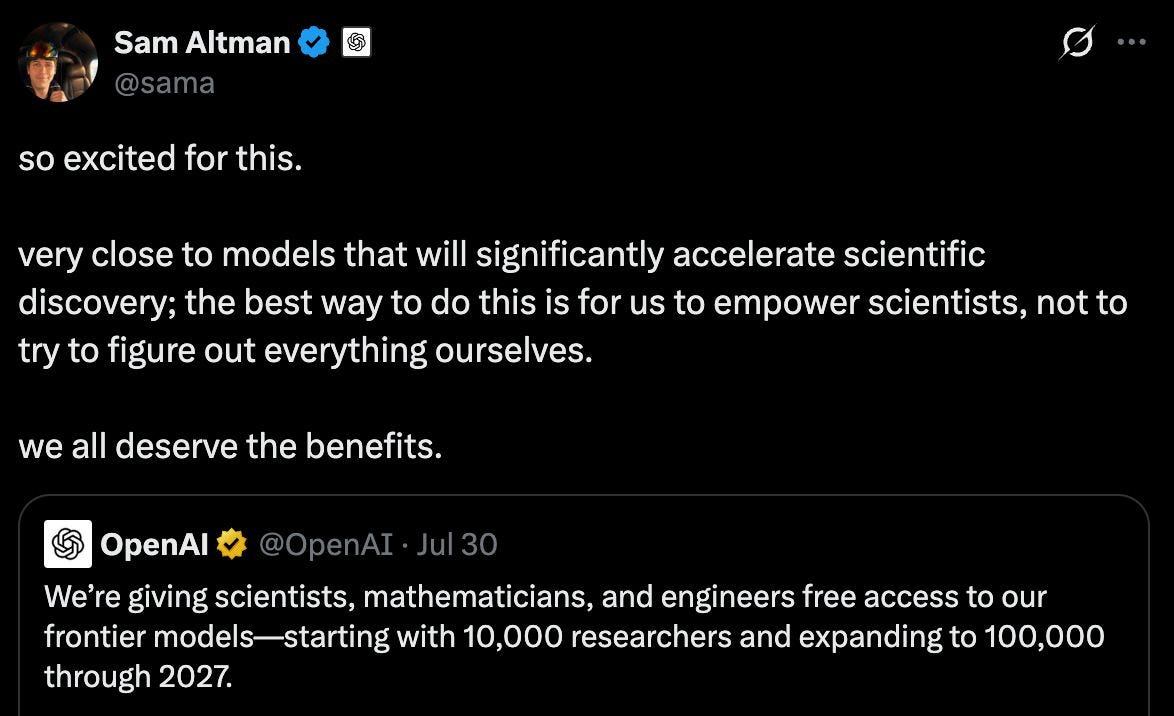
Finally!!! This should have been the mission right from the beginning, but totally glad it’s come to this. Regardless of the company that’s building out these models, this is a very good outcome.
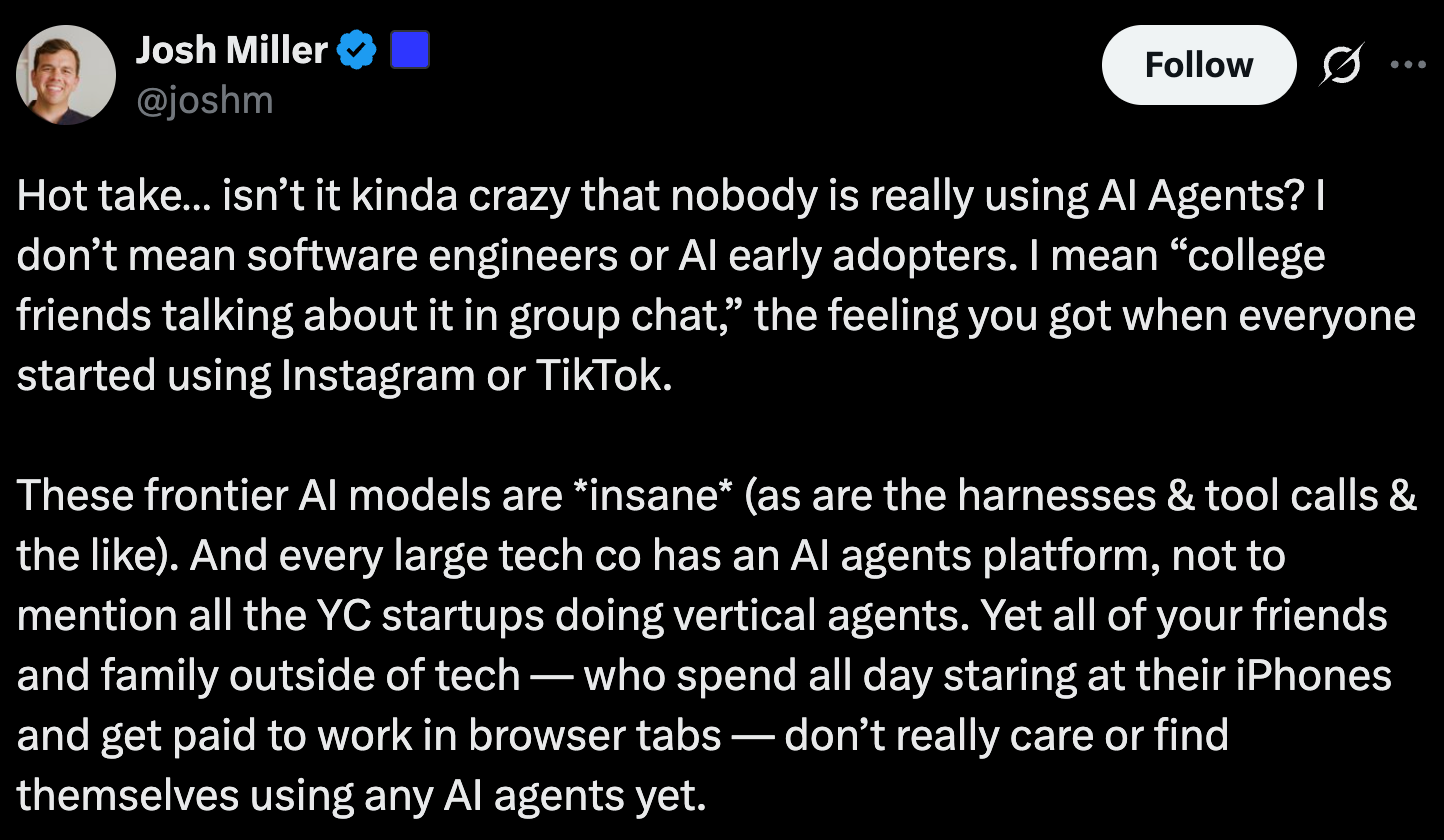
Right now, there’s a bit of an air gap between normies and techies. The problem is that technies are usually at the front lines of all of this, meaning they’re extremely early on the adoption curve. This is a good thing because it allows them to leverage these technologies to improve their own workflows, and a second-order effect of that is that they can then build layers on top of it, meaning it gets packaged up into newer products. Right now, the gap in using agents is still wide because a lot of the agentic stuff is done behind the scenes at companies where these normies might work. A good example is customer service agents when you engage with your bank. My mum has actually engaged with an agent (both online and over the phone), but she probably didn’t know it. Agents are great for a lot of the automation used in businesses/enterprises, but at the same time, agents are not “easy” to set up by just anyone. So the ROI is not high enough for a Joe Blow to start using them and not as frictionless as using an app like Instagram or X. The value isn’t there yet.

I suspect that we’re going to see more augmentation than substitution. This is a good thing. Right now, I just don’t see a world where every knowledge worker is out of a job. Yes, they’ll have to perhaps upskill (or even reskill), but humans are still needed for the most important things. There’ll be more focus on the role and job itself and less emphasis on the tasks to do…which can be automated.
🤝 OUR PARTNERS:
We’ve started to build relationships with a few key affiliate partners due to the stuff I’m building with Workstak. As such, we have a bunch of interest from companies wanting to help our audience (builders/founders, operators, knowledge workers, etc.) get ahead.
Granola: New users get 100% off for their first month
Wispr Flow: New users get a 30-day Pro trial instead of the standard 14 days. Unlimited words, Command Mode, all Pro features, no card required.
Doola: all‑in‑one back-office platform that handles US business formation, banking guidance, bookkeeping, taxes, and e‑commerce analytics for founders worldwide. New users get 20% off doola’s Annual Premium Plans
We’re also working alongside a few more folks where you get on a quick call with them to provide your insights and get rewarded with cash for contributing your time and knowledge. Check them out:
Hire Overseas ($200): Hire pre-vetted overseas talent, from EAs to engineers, with full-service recruiting.
North.Cloud ($500): FinOps platform to reduce AWS and GCP cloud costs.
Pylon ($200): B2B customer support platform across every customer comms channel.
Stanify ($120): AI platform for social media moderation, engagement, and audience insights.
Superpower ($120): proactive health platform using biomarker testing to detect disease early.
Thanks for reading 🙏🏼.
If you enjoy the content, here’s how you can help:
Check out our full TWS archive, plus more in-depth content: under the hood and field guides.
I’d love to get some feedback. If you have some time, fill out the following survey.
Want to get in front of our audience? You can partner with us.
Upgrade to the premium version for full access to all content.
Check out Workstak to get the latest in-depth reviews and insights into AI workflow tools.
🧠 RESOURCES:
How to Deal With AI If You’re Just Getting Started In Your Career
How To Come Up With Ideas Actually Worth Pursuing Using Systems
Startups: Competition is for losers. How to really stand out.
If you liked this, please consider sharing it with your network. Thanks for your support!