


Every week, get the latest curated signals on news, uncommon insights and perspectives that help you become a better builder and thinker. Paid subscribers get full access to all newsletters, deep-dives, essays, field guides, and curated podcast Q&A notes. Please fill out our anonymous survey so we can deliver the best content to you. If you enjoy the content, feel free to share it with your network.
It was probably a good time to write this, as we’re now reaching an inflection point, and why this is an interesting opportunity for all of us. Enjoy!

ICYMI: Last Week’s Release
Idea Engineering, ARM builds their own chip, Prometheus... | TWS #051

Every week, get the latest curated signals on news, uncommon insights and perspectives that help you become a better builder and thinker. Paid subscribers get full access to all newsletters, deep-dives, essays, field guides, and curated podcast Q&A notes. Please fill out our anonymous
and also the latest field guide…
How To Come Up With Ideas Actually Worth Pursuing Using Systems

A comprehensive system designed to help people generate, foster, and analyze their ideas.
Let’s get into the week that was.

Claude Code gets leaked, and this is a very good thing!
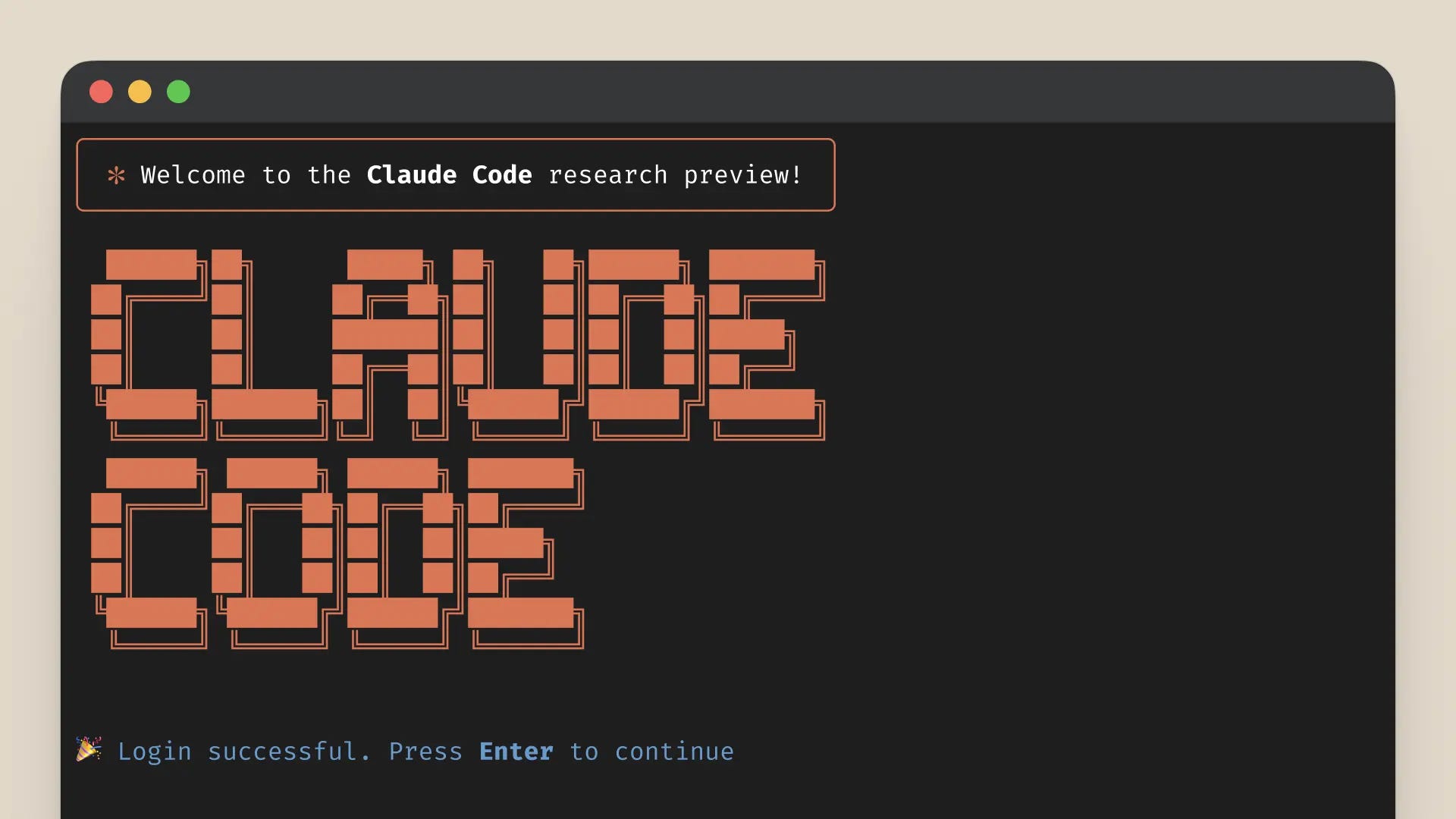
What actually happened: Here’s the story in short —
At 4am on March 31, Anthropic pushed a Claude Code update that accidentally included a debugging file containing 512,000 lines of proprietary source code.
A researcher named Chaofan Shou spotted it within minutes and posted the download link on X, where the thread reached 28M+ views.
Before Anthropic’s team even woke up, the full codebase had been downloaded, copied, and mirrored across GitHub. DMCA takedowns began flying.
Meanwhile, Korean developer and power‑user Sigrid Jin (reported to have used 25B Claude Code tokens last year) woke up to the chaos. Worried about legal risk, he decided to rewrite the entire system from scratch in Python and open‑sourced it as “claw-code.”
Because it was a clean‑room (read on this!) Python implementation, it was considered a new creative work and rapidly became one of the fastest‑growing repos in GitHub history. It was then rewritten in Rust, with tens of thousands of stars and forks.
Someone then mirrored the original leaked code to a decentralized platform with the note: “will never be taken down.” At that point, the code was effectively permanent.
Oh man, the irony...since Anthropic had built its own “Undercover Mode” specifically to prevent Claude from leaking internal secrets, then only to accidentally ship its own source code instead.
Does this really matter? Probably not. Claude Code is an AI harness tool that allows you to leverage Anthropic’s AI models to create agents that do stuff on your computer, i.e., coding, filesystem stuff like writing, editing, storage, organization, etc. The important thing is that Anthropic’s actual Claude model is still behind locked doors.
In fact, this is probably a very good thing because having Claud Code open-sourced means that there will be more eyes on the tool. More eyes means more scrutiny, and more scrutiny means more resilient software. This is especially important when these tools can be used for malicious purposes.
The downside is that they just handed competitors like OpenAI a goldmine of their exact architectural decisions and roadmap, but OpenAI was probably going to come up with something similar eventually. This just accelerated the process.
Behind the scenes: no customer data was exposed. But it did reveal a few things that Anthropic is working on, like KAIROS, which is an invisible companion that never clocks out and works 24/7. Another is a Tamagotchi feature where they want to gamify the experience of using Claude Code.

OpenAI’s US Ad Pilot Tops $100 Million in ARR in Under Two Months
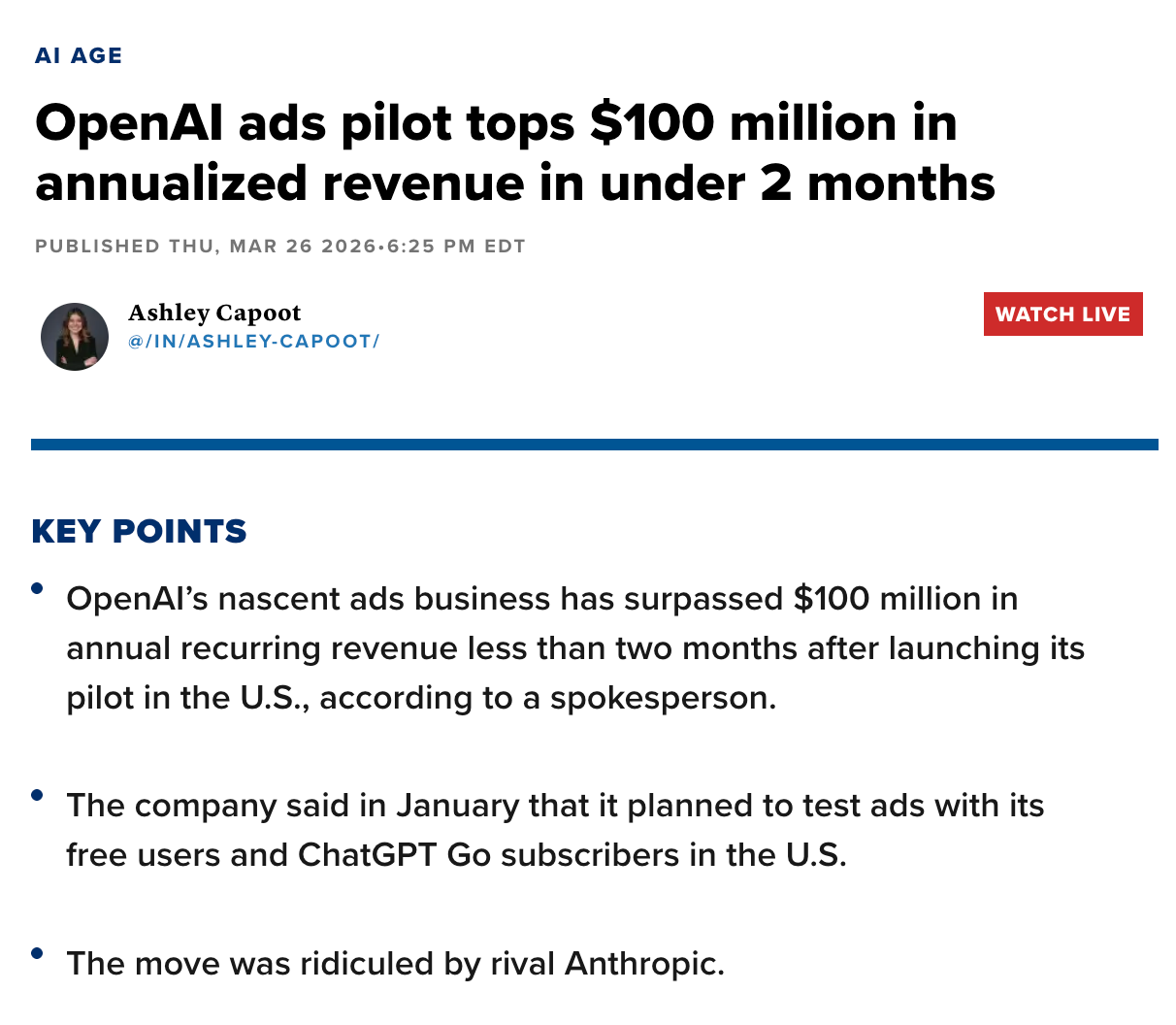
What’s going on: The company’s ChatGPT ads pilot just hit $100M in annualized revenue in six weeks, and they’re currently working with 600 advertisers. Apparently, only ~20% of eligible free-tier and Go (their low-cost subscription) users see ads on any given day. They say that Ads don’t influence chatbot responses, and user data isn’t shared with marketers (for now), and under-18s are blocked entirely.
Why this matters: Obviously, this isn’t really about the amount of the revenue (which is chump change), but it’s more about the proof of concept. OAI has shown (with some ridicule from Anthropic) that the idea of conversational AI is definitely a monetizable attention surface. It’s one that doesn’t (and shouldn’t) cannibalize the product experience (the trust metrics haven’t moved) and also that scales with a user base.
The backstory: OAI quietly brought in David Dugan, a veteran Meta ads exec, to basically build a global ads solutions team. Looks like it might be working.
If $100M ARR is the floor when you’re only showing ads to a fifth of your free users during a pilot, then the ceiling is potentially Google-shaped.
International expansion starts in Q2.
Also, in other news… OAI just closed its monster $122 billion round (HOT DAMN!) — the largest funding round in Silicon Valley history, ahead of a potential IPO expected by the end of the year.
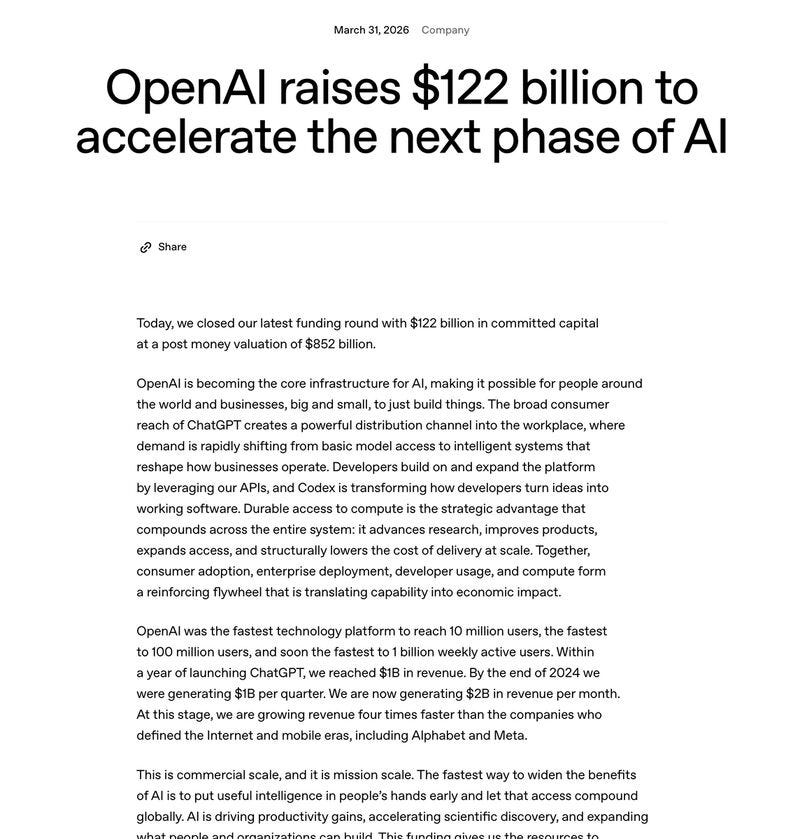
"We are now generating $2B in revenue per month. At this stage, we are growing revenue four times faster than the companies who defined the Internet and mobile eras, including Alphabet and Meta.
ChatGPT has more than 900 million weekly active users, and over 50 million subscribers. Search usage has nearly tripled in a year, and our ads pilot reached more than $100 million in ARR in under six weeks.
Momentum is just as strong on the enterprise side, which now makes up more than 40% of our revenue, and is on track to reach parity with consumer by the end of 2026. GPT‑5.4 is driving record engagement across agentic workflows. Our APIs now process more than 15 billion tokens per minute. Codex now serves over 2 million weekly users, up 5x in the past three months, with usage growing more than 70% month over month."
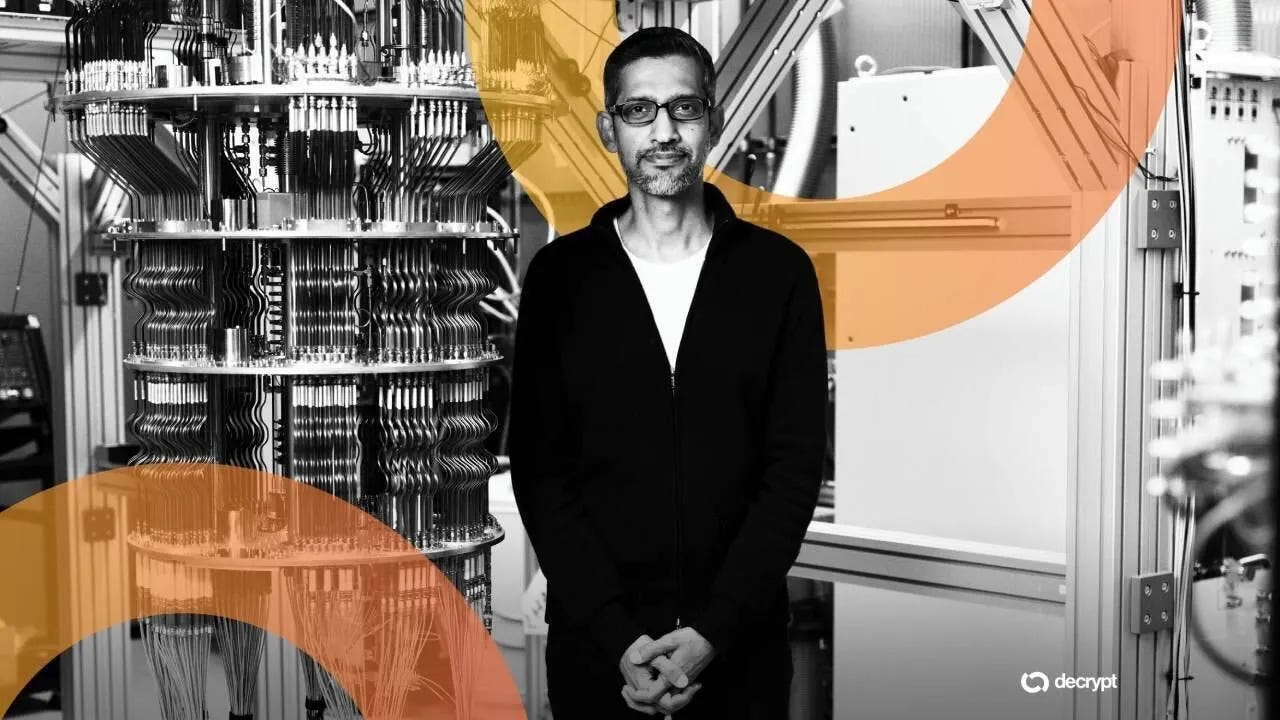
What’s going on: The company just published an official timeline to migrate all of its systems to post-quantum cryptography by 2029. This includes Google Cloud and Android.
This is why it matters beyond Google: the amount of computing resources for cracking current encryption, like RSA, is falling dramatically. Google’s own researchers found that RSA cracking may need 20x fewer qubits than initially thought.
Experts used to think that a future quantum computer needed about 20 million qubits to break Bitcoin’s encryption. It was so big that it made the danger feel very far away.
But recent research has shown smarter ways to design and run these quantum computers. Scientists now estimate that you “only” need around 100,000 qubits to break Bitcoin’s cryptography.
Right now, there isn’t anything close to that yet in real life, and it doesn’t mean Bitcoin is about to be hacked by quantum computing tomorrow. But it does mean that, on paper, the goalposts have moved much closer.
But what about Google? Well, the good news is that they control their own infrastructure and can set a deadline. Bitcoin cannot. Its decentralized architecture means miners, wallets, exchanges, and millions of individual users would all need to coordinate a migration at the same time. Recently, something called BIP360 (a quantum-resistant address format) was recently merged into Bitcoin’s development source branch, but no significant action has yet been taken on this migration effort.
Yahoo is coming back, and what they’re building might have legs!
A little history: did you know that the company passed on a $1 million buyout from Google back in 1998? Then it offered $3B to acquire Google in 2002 — Google rejected it because it wanted $5B. In 2008, Microsoft offered $44B to buy Yahoo but rejected it…
It’s always sobering when you look at these moments with 20/20 hindsight.
What’s happening now: Well, now the company is playing catch-up (again) and betting on an AI answer engine called Scout. It’s powered by Anthropic’s tech and has been rolled out to 250 million US users.
Interestingly enough, Apollo Global Management bought Yahoo for $5B back in 2021, which was a 96% discount from its $125 billion peak valuation during the dot-com boom. They had to trim the fat hard over the years: selling TechCrunch, shutting down AOL’s dial-up service (yes, it still had 500 users) etc.
Apparently, this revamped search engine doesn’t simulate human conversation. There’s no chatbot persona and no sort of “companion”. It just provides answers with hyperlinks and all.
Scout’s layout is a single, visually dense “answer card” that combines text, images, prices, reviews, and prominent citations, making the sources highly visible and driving traffic back to publishers. Google’s AI Overviews/Gemini sit atop or beside a traditional SERP, with source links less visually central.
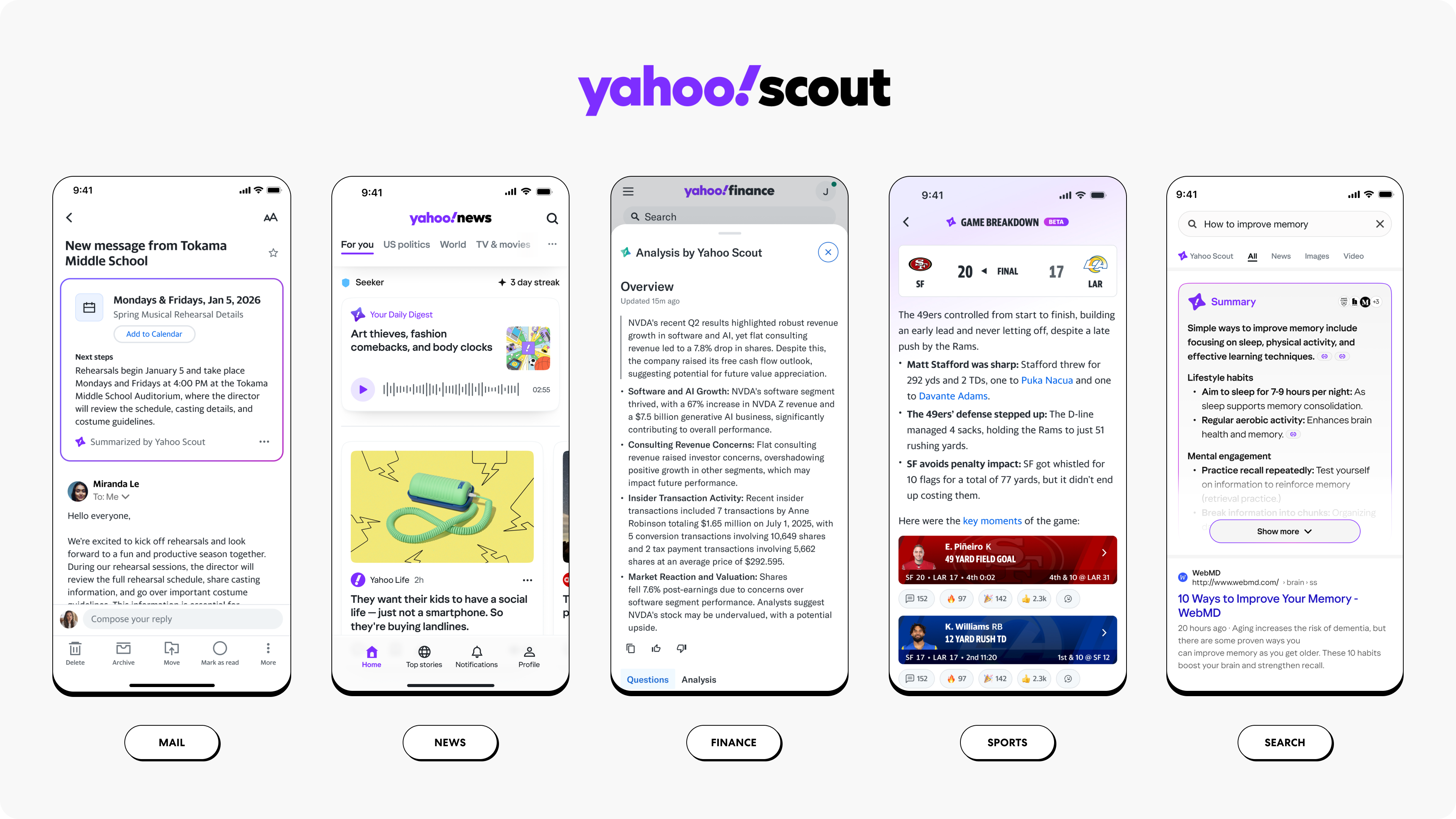
Under the hood: Technically, Scout uses Anthropic’s Claude plus Microsoft Bing’s index, enriched with Yahoo’s own vertical data (Finance, Sports, News, Mail). Google uses its in‑house Gemini models on top of its own index and knowledge graph.
Why this could play well for Yahoo: Business‑wise, Google must protect a massive search‑ads revenue base, so it’s more cautious about fully replacing link clicks with AI answers. Yahoo, with a smaller ads business, can be more aggressive in letting AI dominate the page, especially for shopping, comparisons, and decision‑oriented tasks.
This might work!
Artemis II’s moon mission is setting the stage for something way bigger
What is Artemis? The whole plan of Artemis is NASA’s multi-decade master plan to establish a permanent human presence on and around the moon. It was named after Apollo's twin sister in Greek mythology.
Ultimately, this will be a stepping stone to Mars: The true objective isn’t lunar rock collection. It’s the Artemis Base Camp (planned for the lunar South Pole, where there is water ice) and the Gateway (a space station that will orbit the moon). NASA needs a harsh deep-space environment that is only three days away from Earth to test long-term life support systems, radiation shielding, and off-world resource extraction before they commit to a two-year round trip to Mars. If something breaks on the moon, you can abort. If it breaks on the way to Mars, it becomes much more challenging.
How NASA is working with Boeing and SpaceX. Boeing built the Space Launch System (SLS), and Lockheed Martin built the Orion crew capsule sitting on top of it. Together, they are good at one very specific job: which is safely blasting humans off the Earth and pushing them into lunar orbit. But Orion has no way to actually descend to the lunar surface. It’s an orbital taxi, nothing more.
This is exactly where SpaceX enters the equation.
The Human Landing System (HLS) NASA awarded SpaceX a $2.89 billion contract to build the HLS — the vehicle that will actually ferry astronauts from lunar orbit down to the surface and back up again.
Watch the video below for a more in-depth look into the mission by Everyday Astronaut.
Thanks for reading so far 🙏🏼
If you liked the content so far, you can check out our full TWS archive, plus more in-depth content: under the hood and field guides.
I’d love to get some feedback. If you have some time, fill out the following survey.
Want to get in front of our audience? You can partner with us.
Upgrade to the premium version for full access to all content.

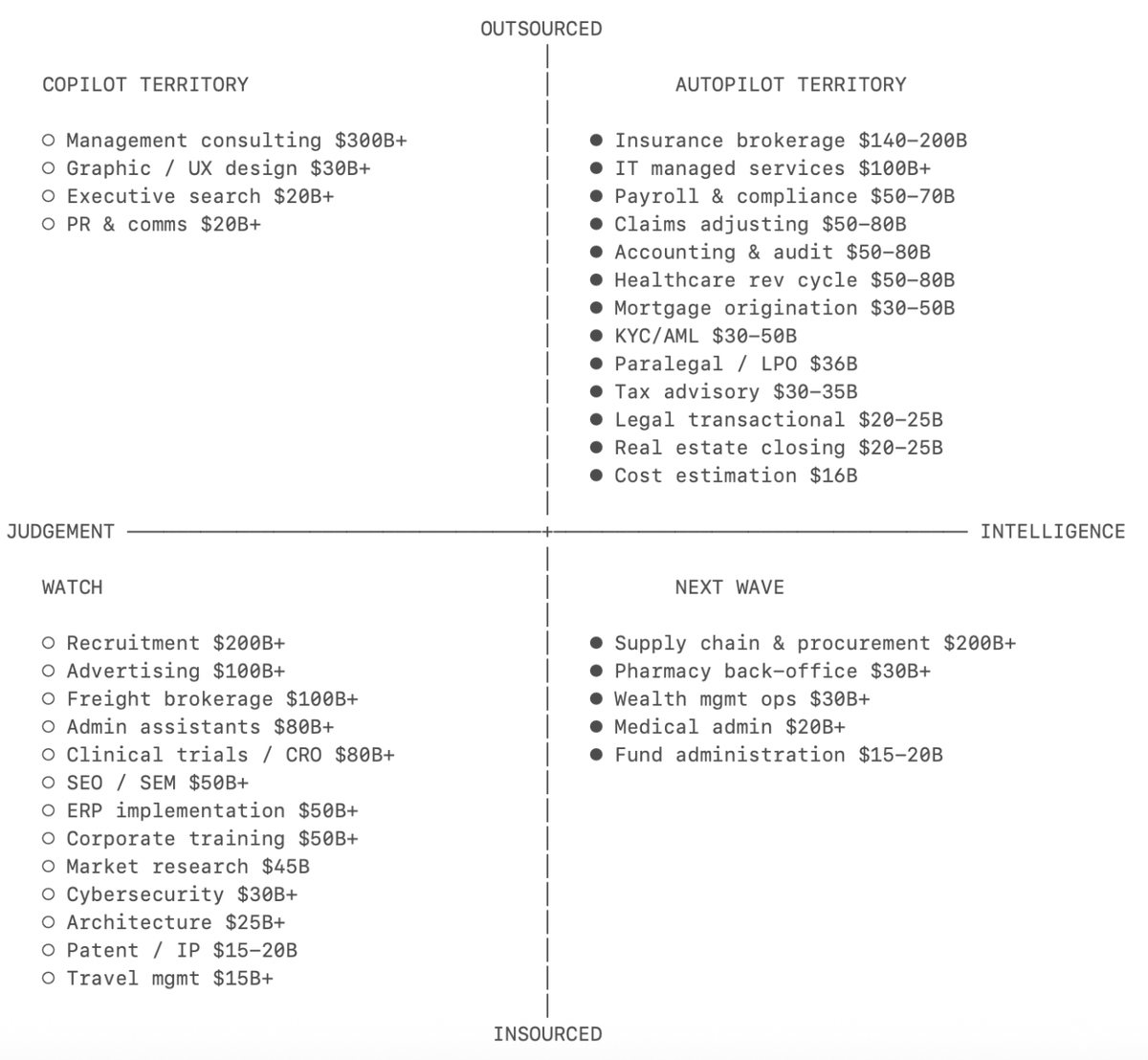
Service is the new software: Super interesting table from Julien Bek (Partner @ Sequoia) showing all the industries that are being disrupted by AI.
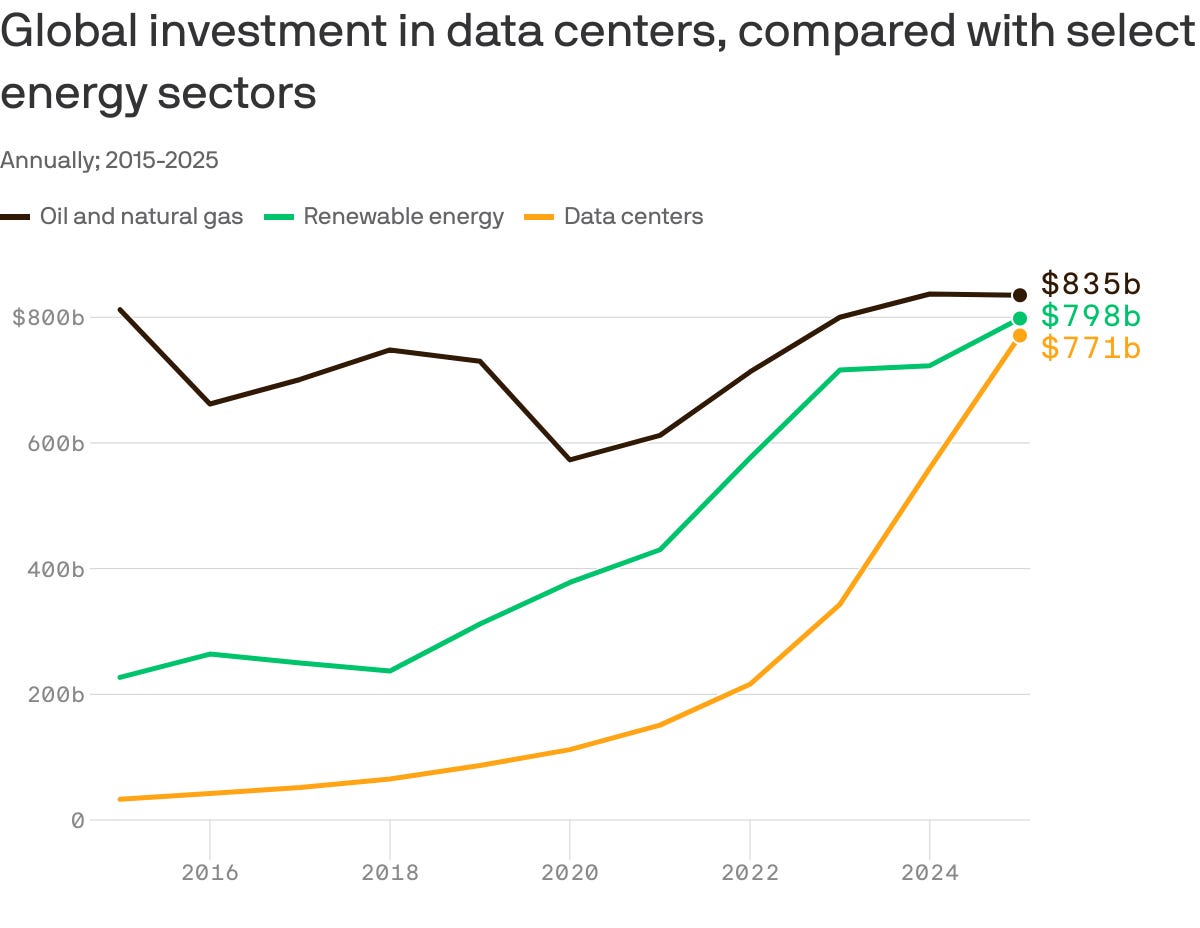
Global spending on data centers is surging to levels that rival energy investments
The U.S. accounted for 42% of the installed capacity of data centers in 2025 — double that of mainland China. It also shows that renewable energy, despite criticism from President Trump, continues to tick up globally.
If you liked this, please consider sharing this with your network. Thanks for your support!