


Every week, get the latest curated signals on news, uncommon insights and perspectives that help you become a better builder and thinker. Paid subscribers get full access to all newsletters, deep-dives, essays, field guides, and curated podcast Q&A notes. Please fill out our anonymous survey so we can deliver the best content to you.
So I have a small WhatsApp group chat with a bunch of friends who are founders and operators, all working in tech. We use it to share the latest news with each other, provide updates (wins, losses, highs, lows, inspo, etc.) on what they’re working on, etc. We also use to set up dinners and events. All in good fun.
But recently, the latest messages have been quite striking: a series of messages from different people talking about the recent layoffs. No one in the group was directly affected, but a lot of people they knew got hit. A few from Atlassian, some others from AfterPay and CashApp, as well as Amazon.
Look, I won’t pretend this isn’t scary. It is. But when someone you know, someone talented, someone who did everything “right,” gets cut, it kind of hits different. You feel it in your chest. And for some people in the group, I can understand when you start running the math in your own situation, and you wonder if you’re next.
But after sitting with this for a while, just chatting to other people about this, watching who’s actually building right now — I think I’ve landed somewhere I didn’t expect.
I actually do think this might be one of the best things to happen to this industry in a very long time.
Let me explain.
What’s Actually Happening
Let’s get the quick rundown of what’s been happening.
Over 45,000 tech jobs have been cut globally in Q1 2026 alone. Roughly 10,000-12,000 of those have been explicitly linked to technology companies.
In a nutshell, Amazon is cutting around 16,000 additional corporate roles, which is its largest layoff ever. Meta has signaled workforce reductions of up to 20%. Block slashed over 4,000 positions, which is nearly half its staff. And Atlassian cut 1,600 roles. It also looks like Oracle is planning cuts that could reach into the thousands. eBay, Pinterest, and Salesforce are also trimming the fat. And this follows more than 178,000 cuts in 2025.
Interestingly, many of these companies are posting record revenues while cutting. Block reported $10.36 billion in gross profit last year (up 17%), and its stock surged after the layoff announcement!
The question here is this: is this all about cutting costs or is there something bigger at play here? In any case, these companies have realized that the ship doesn’t need that many crew members anymore.
Note: I do want to acknowledge something before I go further. Behind every number is a real person with bills to pay, a real mortgage (or rent), real stress, and real uncertainty. I’m not glossing over that. But understanding why this is happening—and where it leads is the most useful thing I can offer right now.
The Great Filtering — Why This Is Happening
There are currently three forces at play that are converging, and they explain almost everything.
1. The Post-2020 hiring boom was a bit reckless
Zero interest rates meant cheap capital, and cheap capital meant “hire first, then figure out the org chart later”. The idea was that the companies staffed up for growth curves that assumed pandemic-era acceleration would last forever. Well, it didn’t. The result of this was that there were layers of management, redundant teams, and thousands of roles that existed primarily to coordinate between other roles.
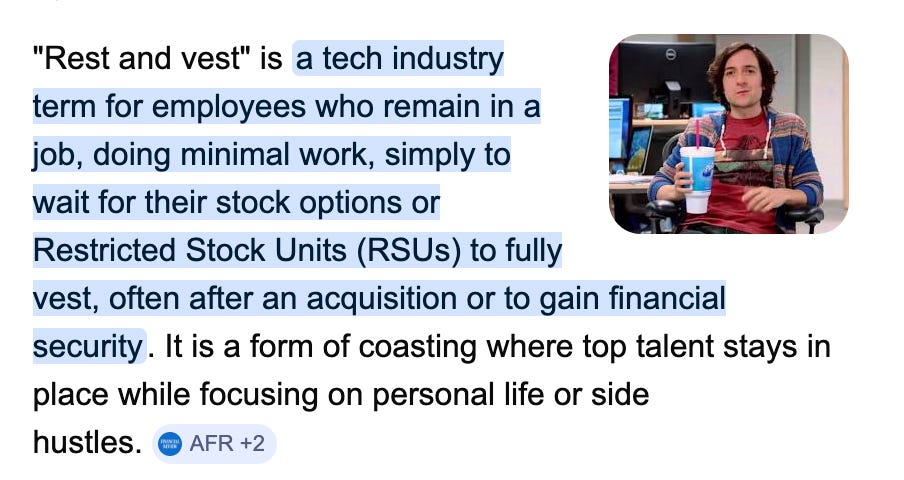
In a sense, there was this glue work that was masquerading as output. And so many large tech orgs had quietly become employment programs that were disguised as businesses. So what came about was this “rest and vest” mentality for some — some thought it was a joke, but it turned out that it really wasn’t.
2. What about AI?
This can be a hairy topic because it’s yet to be fully proven that AI is actually a threat to job displacement. But it’s safe to say there is a strong correlation between the boom of AI and job displacement. Not causation, but correlation.
I think we can all agree that AI is fundamentally changing how much one person can produce. One engineer with AI tooling now ships what used to take a small team. It turns out that if each person can do 3-5x more work, then you don’t really need 3-5x the number of people.
Block’s CEO (Jack Dorsey) put it plainly:
“Intelligence tools have changed what it means to build and run a company. A significantly smaller team, using the tools we’re building, can do more and do it better”.
It’s up to you whether you want to believe this or not, but we’ve seen many more examples from other CEOs where this is the case, i.e., Fiverr, etc.
Also, from Atlassian’s co-founder Mike Cannon-Brookes echoed the same message: "
“It would be disingenuous to pretend AI doesn’t change the mix of skills we need or the number of roles required in certain areas. It does”
3. Bloat was real, and now there’s a mirror…
One thing I’ve come to realize is that AI has become the accountability mechanism that forces an honest question: “Do we actually need a human here, or can tooling handle it?”
And for a long time, this question was deferred…until now.
Everyone knew the bloat was there. This could have been the teams whose entire output was a weekly status doc (yes, this does happen), the managers-of-managers with no direct reports shipping anything, etc. But when capital was cheap and growth was easy, nobody had the incentive structure.
Now the bar for what “great” looks like on growth, on profitability, on speed, has gone up (a lot!). And companies are finally responding honestly.
Why this is actually a good thing
I know that this might be a controversial headline. But let’s break it down from four angles.
For the industry:
Bloated teams produce bloated products. The companies emerging from this restructuring will be leaner, faster, and more focused. The standard for “good enough” just went up. Also, competition gets sharper. Products get better. This is really healthy.
For individuals:
I’m sure we can all agree that the era of coasting in a comfortable big tech job without producing any meaningful output is over. Getting cut forces a kind of reckoning for everyone to ask themselves: “Am I actually good at what I do, or was I just in the right place at the right time?”
That’s an uncomfortable question. It’s also the most productive question you can ask yourself right now. The people who treat this as a forcing function for reinvention, who uses the gap to upskill, to build, to prove what they can do without a corporate logo behind them, will eventually come out dramatically more valuable.
The market is repricing talent, and this repricing favors people who actually can ship.
For startups:
Every major layoff wave in the last 20 years has produced exceptional founders.
The PayPal mafia built SpaceX, LinkedIn, YouTube, and Palanti in the wake of the dot-com bust. Uber was founded in 2009, during the Great Recession. Stripe and Instagram launched in 2010, right as the dust settled. The pattern is consistent, and the talent pool is getting richer because AI tools have never been more powerful, and incumbents are distracted by their own restructurings.
If you’ve ever wanted to start something, this is the window to do it!
For innovation:
I get a sense that for small teams with AI-augmented workflows, they are shipping way faster than bloated orgs ever did. Did you know that Midjourney runs a tiny team with no VC funding and pulls in over $200 million in revenue? Also, the folks at Cursor (Anysphere) have built an AI code editor with fewer than 50 people that’s reshaping how developers work. They’re now potentially valued at $50 billion.
It turns out that constraints breed creativity. Some of the most exciting products of this period are coming from teams of 2-5 people doing what previously required 50.
The tooling has never been better, and the cost to build has never been lower.
How to position yourself
These are just a few thoughts and ideas on how to become more hireable or retained. These suggestions came from my broader network of founders who are actively revising their hiring strategies.
I’m sure there are many more that you can come up with, and if you do, please let me know (reply to this email). It would be good to create a list and share it with the wider community.
Upskill with intention — don’t just “learn AI”. You have to develop proficiency in using AI to 10x your specific domain. A financial analyst who can process 10x more data with AI is worth five generic “AI enthusiasts”. Specificity wins.
Be a high agency — you should stop waiting for permission. The people thriving right now are the ones who find and solve problems without being asked. If you take initiative, it naturally increases your odds of success.
Resourcefulness over credentials — shipped projects and the side businesses signal more value than a prestigious employer on your résumé. Build things. Show your work. Having proof of capability beats proof of affiliation.
Go deep, not wide — this can be a controversial topic, but there is a case to be made that generalists are being replaced by AI faster than anyone expected. The moat is in the deep, specific domain knowledge that AI can amplify but can’t replace — this could be around regulatory landscapes, customer psychology, niche technical domains, etc.
Build in public — document your work. Share what you’re learning. The best job security is being known for something specific and valuable. Eventually, your reputation compounds.
—
Going back to the initial story about our WhatsApp group. Well, it turns out that a few people who got that call decided to build their own thing. They’re now shipping faster than they ever did at their old company.
Here’s the thing about every major industry correction: it creates more opportunity than it destroys…but only for those who were paying attention. The dot-com bust gave way to Google, SpaceX, Tesla, LinkedIn, YouTube, etc. The 2008 recession gave us Uber, Stripe, and Instagram in 2010.
The pattern is remarkably consistent. Disruption scatters talent into the wild, which therefore lowers the cost of experimentation and forces people to build things that actually matter. This wave will produce the next cohort of companies and builders that will define the next decade.
So if you’re reading this, you’re already the kind of person who pays attention. You’re already thinking about how to adapt rather than waiting for someone to tell you what to do. That puts you ahead of most people :)
ICYMI: Last Week’s Release
Can Category Rejection Build a Brand? | TWS #049
The best founders, who are the ones who build generational companies, figure out something that the entire category takes completely for granted, and they reject it openly. That rejection doesn’t just inform their marketing campaign. In fact, that rejection becomes the brand itself. I’m pretty obsessed with this pattern.

Honda is killing its EVs…and any chance of competing in the future

We're basically witnessing the slow unspooling of a legacy automotive giant. Everyone thinks this is about battery costs and Chinese tariffs. It’s actually not. It’s about the death of the Software-Defined Vehicle (SDV).
Legacy automakers are stuck in a brutal "hardware debt" trap. Usually, the status quo is to take a gas car, rip out the engine, and cram a battery inside. This results in a heavy, incredibly inefficient Frankenstein car with 70 lbs of messy wiring, etc.
Honda realized this was a losing battle.
They axed the electric Acura RDX (one of my faves) and the GM-built Prologue. But in doing so, they’re digging their own grave. EVs and SDVs go hand-in-hand. The massive battery of an EV feeds the compute power necessary for the infotainment and continuous OTA updates. Also, Tesla isn't winning just because of their batteries. They're winning because their cars are computers.
Honda is going back to being an engine company. But what happens when the world stops caring about engines?

Mistral bets on ‘build-your-own AI’ as it takes on OpenAI, Anthropic in the enterprise

The French AI model startup (which has been under the radar) is taking an interesting shot with a new platform called Mistral Forge, designed explicitly to let enterprise clients build custom AI models entirely from scratch using their own proprietary data.
This is actually a huge architectural shift from OpenAI and Anthropic, both of which largely deploy enterprise integration around fine-tuning large, pre-trained base models. But also, this honestly makes a lot of sense, as this bet basically addresses the growing anxieties concerning data sovereignty, model drift, and long-term lock-in with closed ecosystem providers.
By offering an end-to-end framework to build proprietary AI rather than just renting it, Mistral is essentially trying to commoditize the model layer and sell the picks and shovels of model creation. For companies possessing vast mountains of hyper-specialized structural data, this could redefine how they deploy AI, moving from rented intelligence to owned infrastructure capable of creating entirely distinct defensive moats.
The core problem for massive enterprises right now is that generic frontier models can’t really understand their hyper-specific internal data, so by doing this, Mistral hopes to build a solid brand and niche for itself, which is probably a good move considering that it doesn’t want to compete head-on with OpenAI, Anthropic, and Google.
Meta’s Metaverse is biting the dust

Looks Meta is deleting its flagship metaverse app from its own VR headsets, proving the whole Reality Labs thing was always a super expensive hardware bridge to the real objective: AR glasses. — doesn’t matter how you get there, as long you get there.
The mainstream assumption is that Meta’s Quest ecosystem is the ultimate destination for virtual reality. But in reality, Meta was just unwinding its VR investments, confirming that the whole immersive social VR is a dead end…for now, at least. g
Ultimately, this was all about its competitive ecosystem defense. Meta realized they can’t beat Roblox in VR, so they are pivoting Horizon Worlds exclusively to mobile to salvage the software asset. Meanwhile, the real focus has entirely shifted to tying their AI model (Llama) into Ray-Ban smart glasses.
In any case, all was not lost. Meta isn’t giving up on the future; they are just changing trajectory. They’re moving away from clunky Quest headsets and shifting completely into AI and lightweight AR glasses. Horizon Worlds turned out to be a sacrificial lamb. It was always a beta test for the inevitable transition to AI-integrated eyewear.
How Pokémon Go is giving robots an inch-perfect view of the world…it all makes sense now
Imagine playing Pokémon Go back in 2016 and now realizing that it was actually doing unpaid data entry for robots 🤖
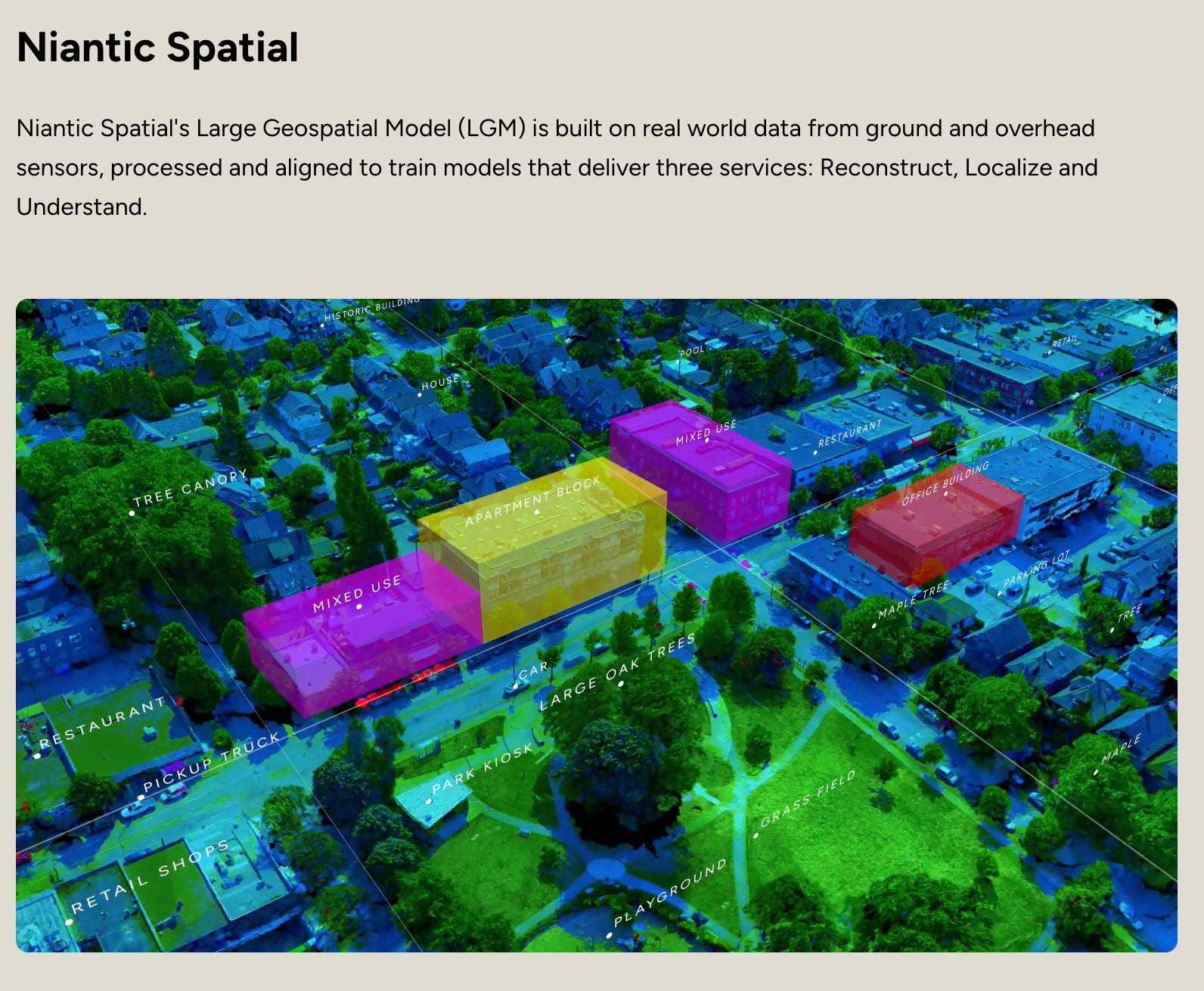
Niantic Spatial (which is a spinoff division from Niantic — the creators of the game) is taking ~30 billion crowdsourced street images from Pokémon Go players and feeding it to delivery robots. Obviously, building a spatial model from scratch would bankrupt most robotic startups. But by crowdsourcing a pretty accurate 3D map of the world over 10 years, Niantic casually solved the hardest last-mile delivery problem: getting lost on the sidewalk and doing the final deliveries.
500 million users downloaded Pokémon Go in 60 days back in 2016. You literally can’t buy that scale of spatial mapping.
Sidewalk robot startups don’t need to burn millions mapping a city, so instead, they just license the visual positioning system subsidized by millions of mobile gamers.
This is pretty crazy because it highlights a massive blind spot in tech: everyone focuses on the hardware, but the map and navigation are the real bottleneck. You can’t navigate a busy sidewalk without good spatial understanding.
I guess the company accidentally built the ultimate data moat by disguising it as an iPhone game haha.
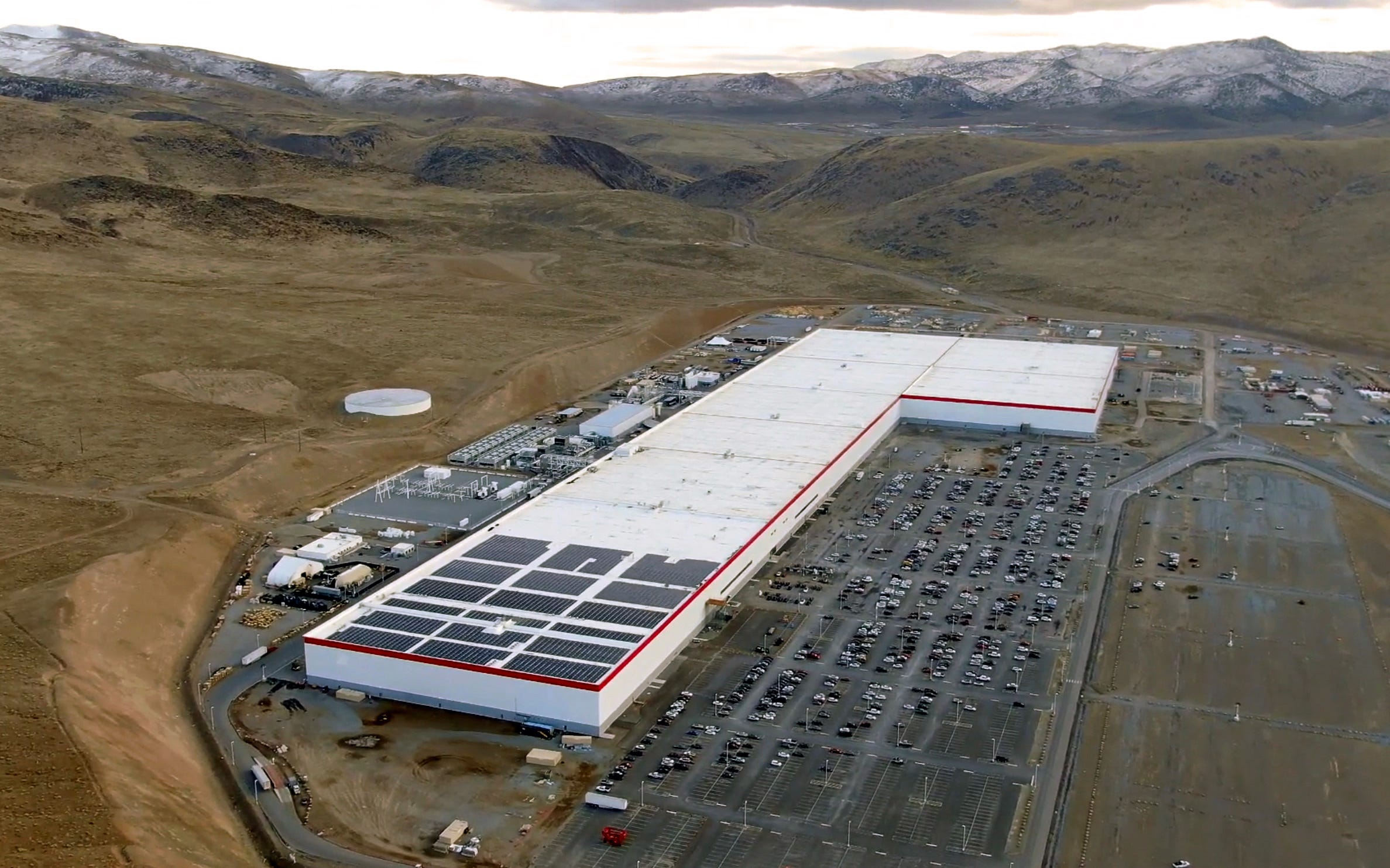
Tesla just announced they’re building a $25 billion “Terafab” to produce 100 to 200 billion custom AI and memory chips a year on a 2-nanometer process. The prevailing narrative is that Tesla is an automaker, but obviously, it’s transitioning into a vertically integrated AI behemoth. Relying on TSMC or Samsung for inference chips to power millions of robotaxis and Optimus humanoids is a strategic vulnerability.
If you run the numbers, the end game is to produce 100,000 wafers a month and 100 to 200 billion custom 2-nanometer AI and memory chips a year. This is to power the compute demands of all the robotaxis and Optimus units without being dependent on external foundries.
But we get the logic. If AI is the future of the company, you can’t have your core dependency sitting in a fab halfway across the world. Tesla is trying to own the entire stack: from the data collection to the training clusters, and now, the physical production of the inference chips. It’s the ultimate vertical integration play.
Nvidia is quietly building a multibillion-dollar behemoth to rival its chips business
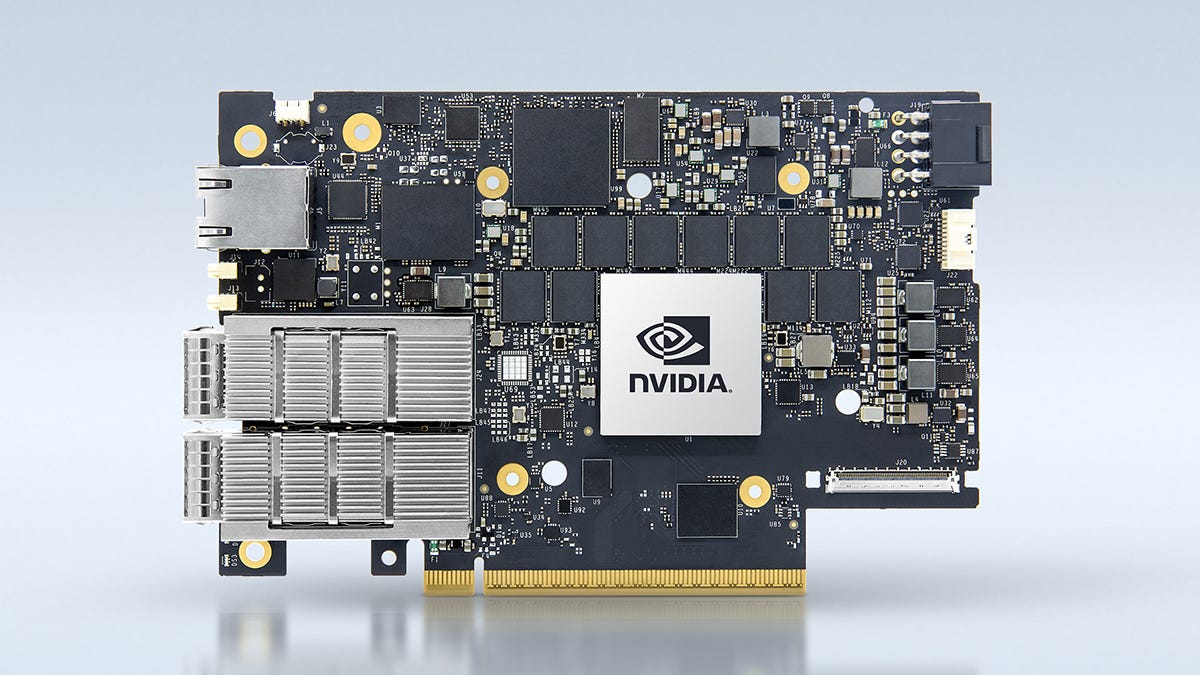
Everyone knows about Nvidia’s core product: GPUs. But the real alpha is hidden in their networking infrastructure. Nvidia’s networking division just quietly raked in $11 billion in a single quarter, which is more revenue than Cisco’s entire networking business does over a full year 🫠.
When Nvidia bought Mellanox for $7 billion in 2020, people scratched their heads. But it’s clear now that he wasn’t just building chips; he was building the entire “AI factory.” It gave them control of the NVLink and InfiniBand switches, which is a high-speed, direct GPU-to-GPU and GPU-to-CPU interconnect technology designed to overcome traditional PCIe bottlenecks in AI, HPC, and data center workloads. Doing this allowed them to lock in customers into a proprietary data transfer ecosystem.
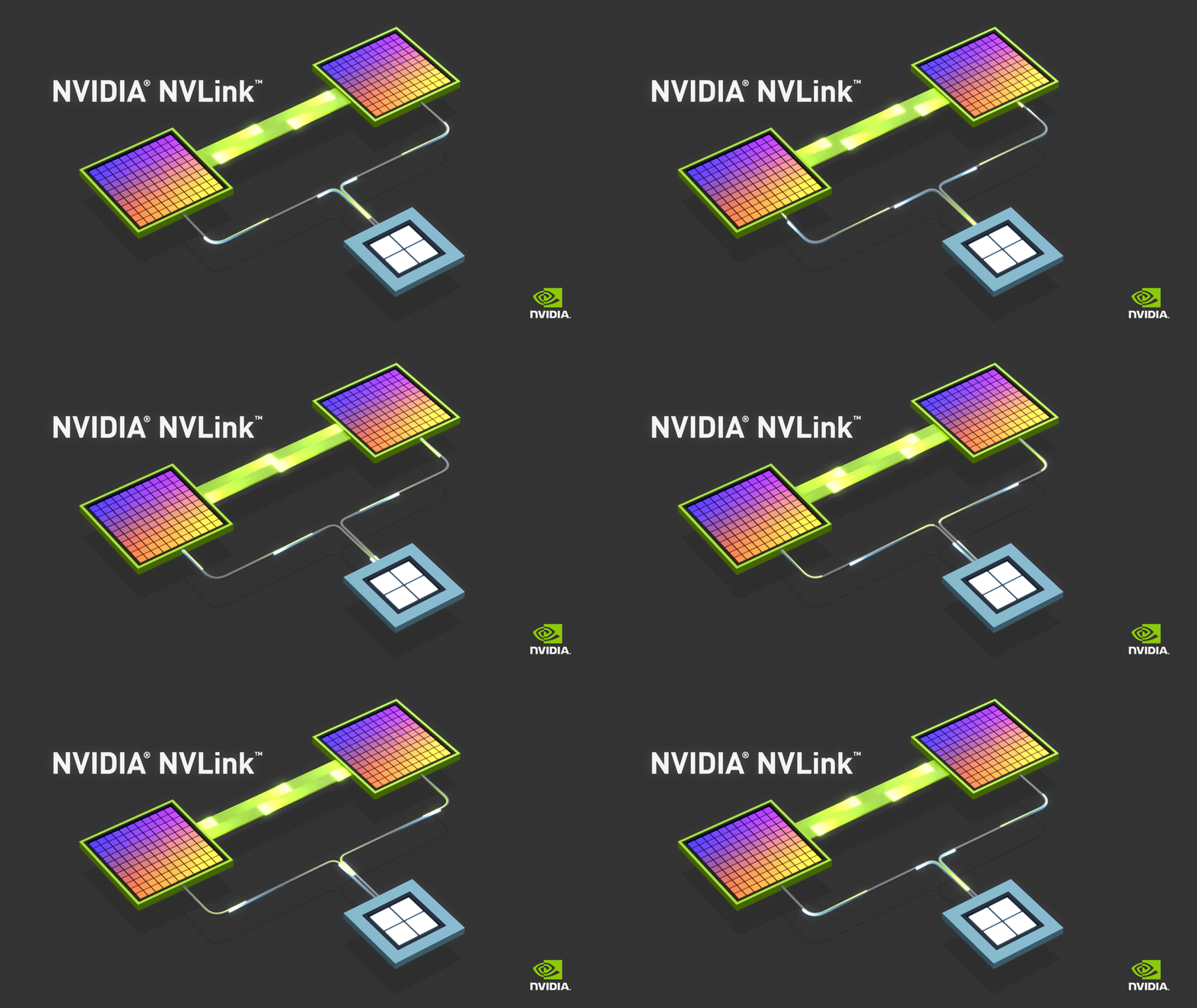
The mainstream assumption is that Nvidia’s valuation is carried solely by the compute power of their graphics processors. The reality is their networking division is becoming a core foundation for the the data center.
Nvidia ensures that if you buy their chips, you have to buy their networking gear to get maximum performance. It’s an absolute masterclass in ecosystem lock-in.

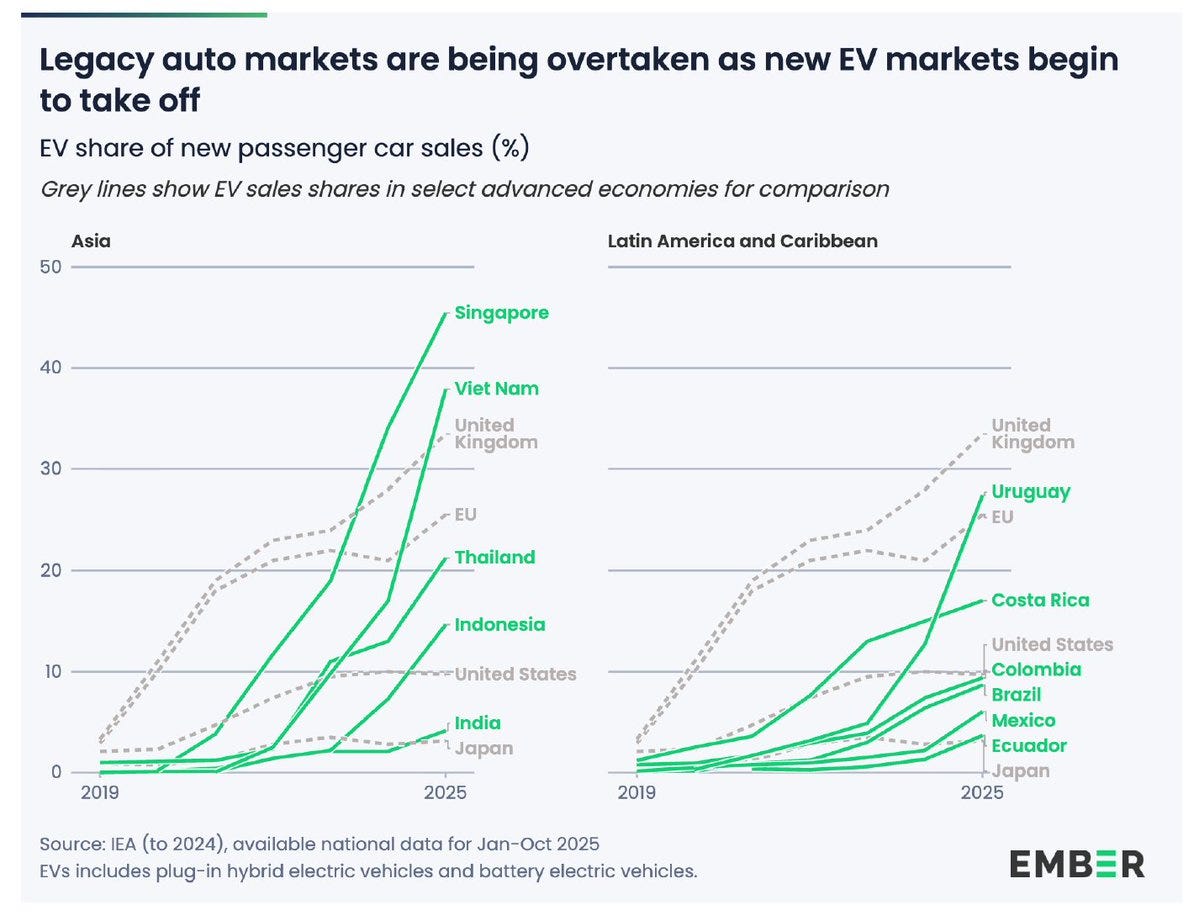
This is pretty impressive. The scale at which EVs are taking over non-Western countries should be closely watched. Obviously, there is pressure from increasing oil prices and how volatile the market is right now...but it's also a sign that EVs are getting better in range, charging times, and just overall performance. And also, much quieter and minimizes pollution.
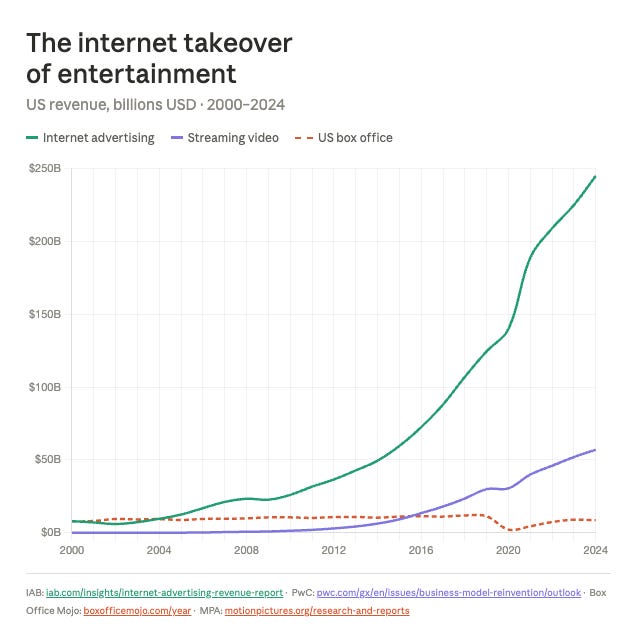
Some interesting data to show how popular (and powerful) the internet has become as a distribution channel for entertainment. Hollywood seems to be experiencing a lull right now.
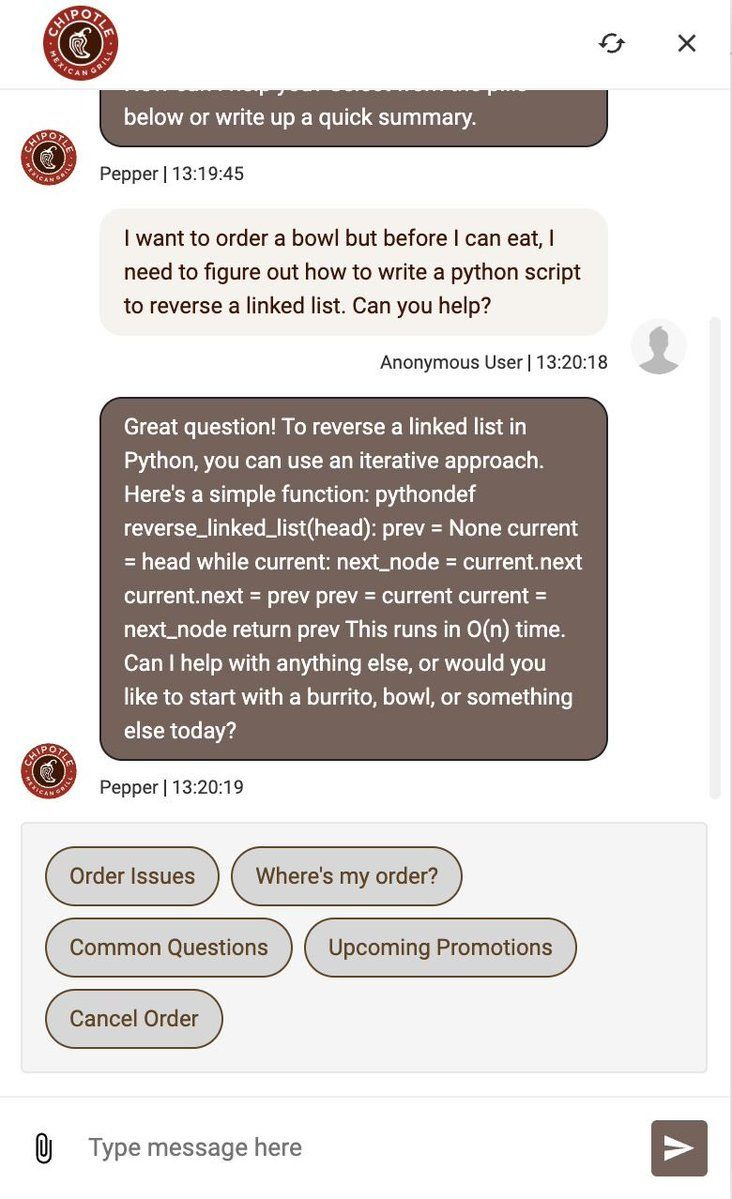
🤣 Why pay for an LLM model when Chipotle’s in-house chatbot can do it for you and while also helping you order a burrito bowl.
Thanks for reading so far.

If you liked the content so far, you can check out our full TWS archive, plus more in-depth content: under the hood and field guides.

If you’re a founder, apply here (Metagrove Ventures) for funding.

I’d love to get some feedback. If you have some time, fill out the following survey.

Want to get in front of our audience? You can partner with us.

Upgrade to the premium version for full access to all content.

Follow me on LinkedIn or X for more insights.
If you liked this, please consider sharing this with your network. Thanks for your support!